Amazon Launches AI-Powered Merchandise Design Feature, Revolutionizing Custom Product Creation

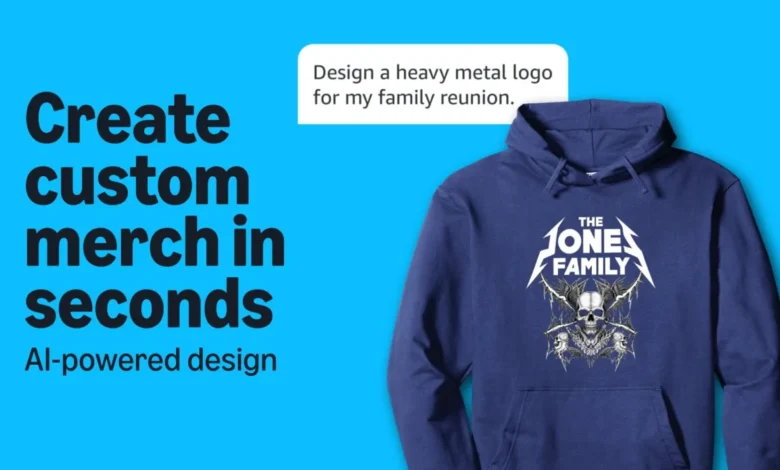
On Monday, Amazon introduced a groundbreaking new feature that allows anyone to design merchandise using artificial intelligence, posing an expanded and significant challenge to established online custom merchandise platforms such as Redbubble, Bonfire, Spring, and Fourthwall. The e-commerce giant announced that users are now empowered to create novel products by leveraging AI prompts directly through the Alexa feature embedded within its ubiquitous Shopping app, marking a pivotal moment in the democratization of design and personalized commerce.
This strategic integration enables individuals to effortlessly transform abstract ideas or specific concepts into tangible designs, which can then be emblazoned on a diverse array of items, ranging from various apparel types to tumblers and water bottles. These custom-designed products are subsequently made available through Amazon’s proprietary print-on-demand service, Merch on Demand, streamlining the entire process from conceptualization to delivery. The utility of this service extends beyond mere novelty; it could prove invaluable for crafting one-off designs for special occasions, such as personalized T-shirts for a family reunion, unique custom gifts for friends or loved ones, or even bespoke items featuring a cherished portrait of a pet. While the convenience and accessibility are undeniable, it is worth noting that artists whose original work may have been utilized in the training data for generative AI models might harbor less enthusiasm for such applications, highlighting a growing ethical debate within the creative community.
The Evolution of Print-on-Demand and Amazon’s Strategic Entry
The concept of print-on-demand (POD) is not new. Pioneers like Zazzle and CafePress emerged in the early 2000s, offering individuals and small businesses the ability to create and sell custom products without the need for inventory management. These platforms democratized product creation to an extent, but still required users to possess some level of design proficiency or access to graphic designers. Over the years, the POD market has steadily grown, fueled by advancements in digital printing technology, the rise of e-commerce, and an increasing consumer demand for personalized and unique items.
Amazon first formally entered this space in 2015 with the launch of "Merch by Amazon," later rebranded as "Merch on Demand." Initially, this service was primarily aimed at content creators, game developers, musicians, and brands looking to monetize their intellectual property by selling custom-branded merchandise directly to their fan bases without the complexities of manufacturing, inventory, or fulfillment. Merch on Demand provided a robust infrastructure, handling the printing, shipping, and customer service, while creators focused on design and marketing. This model proved highly successful, attracting a vast number of independent designers and small businesses who found a new avenue to reach Amazon’s enormous customer base. The platform’s stringent content policies and quality control helped establish it as a reliable option for both sellers and buyers.
The introduction of AI-powered design capabilities represents a significant evolution of Merch on Demand, shifting its primary user base from established creators and businesses to the broader consumer market. This move underscores Amazon’s continuous effort to innovate and expand its services, leveraging its technological prowess and unparalleled logistical network to capture new segments of the e-commerce landscape.
Democratizing Design: Lowering the Barrier for Consumers
One of the most profound implications of this new feature is its potential to significantly lower the barrier for entry into custom product design. Traditionally, creating personalized merchandise required either design software skills, the financial means to hire a graphic designer, or a reliance on pre-made templates offered by POD platforms. Amazon’s AI integration circumvents these prerequisites. By enabling users to simply describe their ideas using natural language prompts, the system empowers anyone, regardless of their artistic talent or technical proficiency, to become a product designer.
This strategic positioning places AI-generated merchandise directly within the familiar and highly trafficked Amazon Shopping app. For consumers, this means that turning a creative thought into a physical product is now as intuitive and accessible as any other shopping transaction. While print-on-demand businesses have historically catered to a segment of creators and organizations, Amazon’s latest feature could fundamentally alter consumer perception, making AI-designed merchandise simply another convenient shopping option among millions. This could lead to a surge in demand for personalized items, as the friction associated with their creation has been drastically reduced.
The Mechanics of AI-Powered Customization
Utilizing this novel feature is designed to be straightforward and integrated seamlessly into the existing Amazon Shopping app experience. Customers initiate the process by tapping the ubiquitous Alexa icon, typically located in the bottom right corner of the app interface, or by typing "customize" into the search bar and selecting the relevant drop-down option. This action transports the user into a dedicated interactive environment where they can articulate their design vision to Alexa.
The core of the experience lies in the generative AI’s ability to interpret these textual prompts and translate them into visual designs. Users can describe their desired image, text, or pattern, and the AI will generate an initial design concept. The process is iterative; users are not confined to the first output. They can refine the design by clicking on suggested actions, such as "make it brighter," "change the font," or "add a border," or by typing in more specific changes to guide the AI towards their ideal outcome. This conversational and responsive interaction mimics a collaborative design session, making the process engaging and user-friendly.
Once satisfied with the design, users can preview it on various product mock-ups. A key aspect of the feature is its social sharing capability: results can be shared with friends or family members, allowing them to view the design and, crucially, add the custom product directly to their own Amazon shopping carts. This fosters a collaborative shopping experience, ideal for group orders for events or collective gift-giving.
The comprehensive list of supported merchandise items currently includes a wide range of apparel and accessories: T-shirts, V-necks, long-sleeve shirts, polo shirts, quarter zips, jerseys, hoodies, sweatshirts, tank tops, raglans, tumblers, and water bottles. This broad selection ensures that users have ample choice for applying their AI-generated designs to practical and popular items. The service is currently exclusive to the U.S. market, and while the design feature itself is free to use, customers are only charged for the physical products they choose to purchase. Amazon then takes responsibility for the production and subsequent delivery of these items, often utilizing its expedited Prime shipping network, further enhancing the convenience factor.
Competitive Landscape and Market Implications
Amazon’s entry into AI-powered custom merchandise creation significantly intensifies competition within the burgeoning print-on-demand market. Established players like Redbubble, known for its vast community of independent artists and diverse product offerings; Bonfire, which specializes in fundraising campaigns and custom apparel for groups; Spring (formerly Teespring), a platform popular with content creators for selling branded merchandise; and Fourthwall, which provides integrated e-commerce solutions for creators, will undoubtedly feel the pressure.
The global print-on-demand market was valued at approximately $6.19 billion in 2022 and is projected to reach $58.67 billion by 2032, growing at a compound annual growth rate (CAGR) of 25.3%. This exponential growth is driven by several factors, including the continued expansion of e-commerce, the increasing demand for personalized products, the rise of influencer marketing, and the low barrier to entry for entrepreneurs. Amazon, with its unparalleled market reach, existing customer base of hundreds of millions, and robust logistical infrastructure, is uniquely positioned to capture a substantial share of this growth.
Amazon’s competitive advantage lies not only in its scale but also in its seamless integration of the design process directly into its core shopping application. This eliminates the need for customers to navigate to separate platforms, create new accounts, or learn different interfaces. For many consumers, the convenience of staying within the Amazon ecosystem will be a compelling factor. Competitors will likely need to innovate rapidly, perhaps by focusing on niche communities, offering more advanced design tools for professional artists, enhancing creator monetization models, or building stronger brand loyalty through unique platform features and community engagement.
Broader Impact and Ethical Considerations
The implications of Amazon’s AI merchandise feature extend beyond market competition, touching upon broader issues related to creativity, intellectual property, and the ethics of artificial intelligence.
For Independent Artists and Designers: This development presents a complex scenario. On one hand, it could be perceived as a threat. The ease with which consumers can now generate designs using AI might devalue human artistry, leading to a saturation of generic designs and potentially impacting the livelihoods of artists who rely on unique, handcrafted creations. The original article subtly hints at the controversy surrounding AI training data, where existing human artwork is often scraped from the internet without explicit consent or compensation, raising serious concerns about copyright infringement and fair use. Advocacy groups for artists have consistently voiced these concerns, calling for greater transparency and ethical guidelines in AI development.
On the other hand, some artists might view AI as a powerful new tool for ideation, rapid prototyping, or even generating new styles and concepts to inspire their human-driven work. The challenge for artists will be to adapt, perhaps by leveraging AI themselves to augment their creative process, focusing on truly unique and high-quality designs that AI cannot yet replicate, or by specializing in custom, human-led design services.
For Consumers: The feature offers unprecedented levels of personalization and convenience. Consumers can now manifest their creative ideas into physical products with minimal effort, leading to more unique gifts and personal expressions. This aligns with broader e-commerce trends where personalization is increasingly a key differentiator, with studies showing that a significant percentage of consumers are more likely to purchase from brands that offer personalized experiences.
For Amazon: This move reinforces its position as an innovation leader and further entrenches its dominance in the e-commerce sector. By integrating generative AI, Amazon leverages its substantial investments in artificial intelligence, from its pioneering work with Alexa to its advancements in machine learning services like Amazon Bedrock. This could unlock new revenue streams, deepen customer engagement, and further expand its ecosystem, making it even harder for competitors to challenge its comprehensive offerings.
Intellectual Property and Copyright Challenges: The legal landscape surrounding AI-generated content is still nascent and highly complex. Questions arise regarding the ownership of designs created by AI: Does the copyright belong to the user who provided the prompt, the AI system itself, or the company that developed the AI? Furthermore, there is a significant risk of inadvertent copyright infringement if users prompt the AI to generate designs that closely resemble existing copyrighted works. Amazon will need robust systems and clear policies to address these challenges, potentially implementing filters to prevent the creation of infringing designs and establishing clear terms of service regarding intellectual property ownership for AI-generated content.
Ethical Implications of AI: Beyond copyright, the broader ethical implications of generative AI remain a critical discussion point. Concerns about algorithmic bias, the potential for AI to perpetuate harmful stereotypes through its outputs, and the impact on creative jobs are all relevant to this new feature. While Amazon aims to empower users, the responsible development and deployment of such powerful tools require continuous vigilance and proactive measures to mitigate potential negative consequences.
In conclusion, Amazon’s introduction of AI-powered merchandise design through its Shopping app represents a significant leap forward in personalized e-commerce. It democratizes the design process for millions of consumers, offers a new avenue for creative expression, and solidifies Amazon’s innovative edge. However, this advancement also opens a Pandora’s box of challenges and ethical considerations for artists, competitors, and the legal framework surrounding intellectual property in the age of artificial intelligence. As this feature rolls out and evolves, its true impact on the creative economy and consumer behavior will undoubtedly unfold, shaping the future of custom product creation for years to come.